
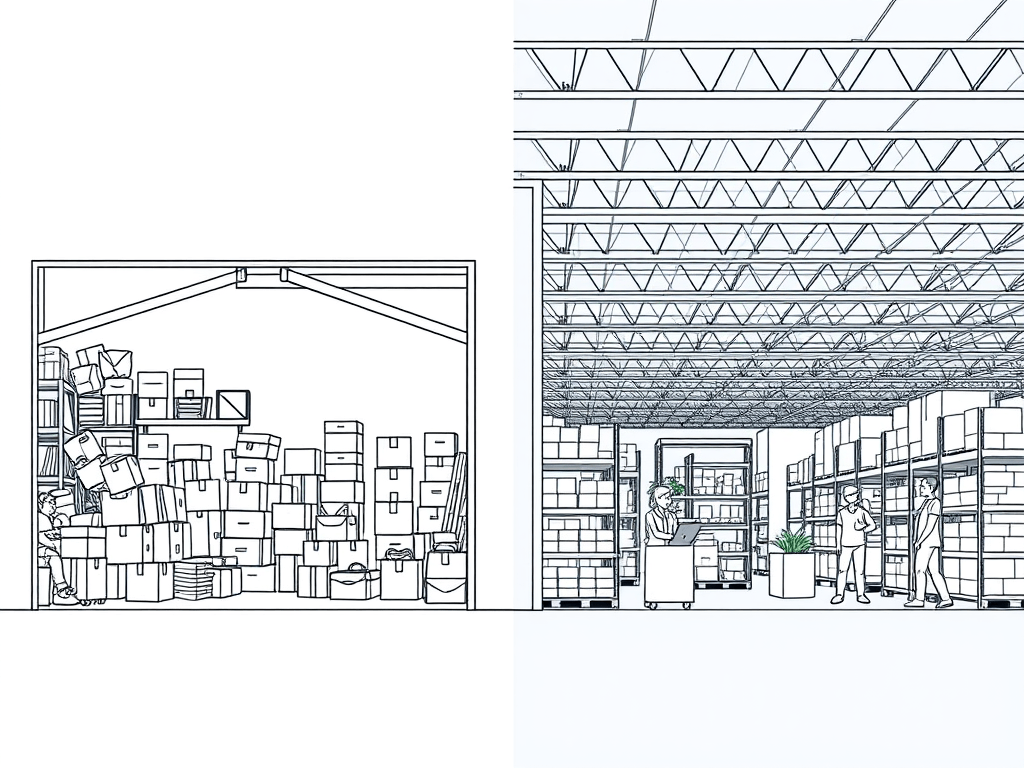
You’re a new business with a great product that customers love. You start by storing products in your garage or basement. You buy shelves and an AC unit to keep things tidy. As you increase your digital ad spend, orders rise, and the bonus room becomes your storage space. Your kids use inventory boxes as forts, and your partner gets tired of scraping ice off the car because it can’t fit in the garage.
The time has come to decide on leasing a warehouse. The challenge is that your sales trends are unpredictable, making it hard to know what you can afford. You’ll need climate control, a clean workspace, and flexibility to expand or downsize as needed. Additionally, adding hourly packing labor and commute time will reduce your time for product innovation and growth.
You are at a critical tipping point. It is exciting. And daunting. You are ready decide the next phase of your business strategy.
Keeping warehousing, kitting, packing, and distribution in-house is a type of vertical integration. This means a company controls parts of its supply chain, production, and distribution instead of relying on outside vendors. Companies choose this strategy for various reasons, such as improving efficiency, saving costs, ensuring quality, enhancing information flow, and considering environmental factors.
On the other hand, businesses choose to collaborate with vendors for various aspects of production, sales, distribution, and storage, sometimes for the same reasons others prefer to handle those functions in-house.
Large and small businesses alike face these decisions, and it’s an important strategic choice. Every circumstance is different. What works for one business will not necessarily work for another.
For a high-growth business focused on consumer products that has hit a critical threshold, there are some key questions to ask when deciding whether to work with a fulfillment company:
- What are the total costs for each option? Include direct costs like warehouse lease, labor, and technology, as well as hidden costs. How much time will I need for fulfillment instead of product innovation and sales? Are there unexpected costs during sales spikes or troughs?
- What role does the behind-the-scenes fulfillment process play in your brand experience? Can I reasonably expect a vendor to deliver the product to meet my brand promise?
- Do I have the expertise to manage warehouse operations efficiently, or will I/my team need significant hiring and training?
- What flexibility does each option provide during periods of growth or seasonal demand fluctuations?
- How does each option affect my cash flow? Look at both upfront investment and ongoing operational expense in context of cash priorities.
- If we need to make changes, how quickly can I make a change with each option?
If the answer points to finding a vendor to handle fulfillment, the next crucial step is choosing the right one. You’ll want a partner you can trust, who treats your customers and your brand as you would. Look for a vendor with a record of reliability and quality service, and the capability to grow with your business. Also, consider their communication style and responsiveness, as good collaboration is vital for a successful partnership. The right vendor will reflect your values and customer service standards, ensuring a consistent experience for your customers.

 Lone Pine Fulfillment
Leave a comment